Showing posts with label news. Show all posts

Sunday, September 2, 2018

Two burials with rich grave goods were found in a pit from the Middle Minoan IA era (2100-2000 BC) in Siteia, NE Crete, during excavations of a palace-related cemetery.

The excavations took place for 14 years under Director Emerita of the Ministry of Culture Metaxia Tsipopoulou, at the cemetery of Petras in the area of Siteia, dated to 2800-1700 BC (Pre- and Proto-Palatial periods).

In the first pit, a primary or original burial of a man included the first weapon found in Petras, a bronze short sword, Tsipopoulou said in a statement. The first burial also included a “secondary burial of a woman with a large number of gold beads of very fine workmanship” and beads of silver, crystal, carnelian, and jasper.

The second burial, also a primary one, was dated to the Proto-Minoan II period (2600-2300 BC) and included “dozens of gold beads with exquisite pressed decoration of spirals, as well as hundreds of other beads of gold or silver, with a diameter of 1mm, which appear to have been sewn onto a garment.”

A third burial was unique to Petras and consisted of a tomb made of perpendicular schist slabs, forming a box-like structure. This contained two secondary burials of children under 10 years old and two gold bracelets from thin sheets of gold.

For its era, the Petras cemetery has proven to be by far the largest on Crete. It belonged to elite family members related to the palace in the area. So far, 26 funerary buildings of 45 to 150 sq.m. have been excavated, along with five burial pits that include irregular stones or low walls.

According to Tsipopoulou, the cemetery contains at least four or five funereal buildings that were noted in 2018 but have not been fully excavated yet. It also includes two extensive areas for rituals, dating to between 1900 and 1700 BC (Middle Minoan IB-IIB) and two periboloi, or low built enclosures, east and west.

In antiquity, Petras had a large port and served as the entry gate to eastern Crete during the Pre- and the Proto-Palatial period for the incoming trade of raw materials, objects and ideas from Syria and Egypt.

Its palace, according to the official excavation site (https://www.petras-excavations.gr/el) was built in the Middle Minoan IIA era (19001800 BC), slightly after the large palatial complexes of central Crete. The preserved section of it covers 2,500 sq.m., but it’s impossible to calculate its original extent because the whole southern section has been destroyed.

In the 14th century BC (during Late Minoan IIIA), following the destruction of its palace, there was building activity in the cemetery that appears to be related to honoring ancestors. This activity lasted until the 12th century BC.

During this year’s season, the excavation staff included 19 graduate and doctoral students from the Universities of Athens, Crete, Thessaloniki, Kalamata, Madrid, Harvard, Rhodes and Toronto. Senior excavators included professors David Rupp, Miriam Clinton and Sevi Triantafyllou, Dr. Maria Relaki, and nine workmen from Siteia.

The study group includes 26 archaeologists from Europe, the United States, and Canada. The excavation, the stabilization of architectural features, the conservation of findings and their study are funded exclusively by INSTAP, the Institute for Aegean Prehistory which was established as a nonprofit in the United States in 1982.

Archaeological Excavation Uncovers Ancient Minoan Graves on Crete

Egypt says archeologists have unearthed one of the oldest villages ever found in the Nile Delta, with remains dating back to before the pharaohs.

The Antiquities Ministry said Sunday the Neolithic site was discovered in Tell el-Samara, about 140 kilometres (87 miles) north of Cairo. Chief archaeologist Frederic Gio says his team found silos containing animal bones and food, indicating human habitation as early as 5,000 B.C.

That would be some 2,500 years before the Giza pyramids were built.

In recent years, Egypt has touted discoveries in the hopes of reviving tourism after the unrest that followed its 2011 popular uprising.

Egypt says village found in Nile Delta predated pharaohs

Archaeologists made an intriguing discovery recently at the neolithic site of Göbekli Tepe in southern Turkey. They uncovered a series of giant stone troughs erected more than 10,000 years ago. And at the bottom of these huge vessels, they found traces of a chemical called calcium oxalate, typically produced during the soaking, mashing and fermenting of grain. It’s a by-product of brewing, in other words.

From this evidence, researchers conclude that Göbekli Tepe was a vast festival site where Stone Age men and women came to feast and to drink beer by the trough-load. Humans have known how to party for a very long time, it would seem. In fact, our love of alcohol can be traced even further into the past, according to scientists who now believe that social drinking played a key role in our evolution as we developed into big-brained, social primates.

It is a theory that will form the core of a major conference at the British Academy next week, Alcohol and Humans: A Long and Social Affair. Delegates will argue that our love of alcohol is deep-rooted and that drink – although harmful in excess – still has a role to play in generating happiness and wellbeing, as the broadcaster Adrian Chiles maintained in his TV film, Drinkers Like Me, last week.

“Studies clearly show that there are social and wellbeing benefits to be derived directly from drinking alcohol, especially in relaxed social environments,” said the evolutionary biologist Professor Robin Dunbar of Oxford University. “That is why the practice has persisted for so long.”

Dunbar, a fellow of the British Academy and one of the conference’s organisers, argues that our hunter-gatherer ancestors began to hold feasts at least 400,000 years ago after they learned how to use and control fire. Dinners round firesides helped us to cement relationships as fellow tribesfolk exchanged food, stories and gossip. Alcohol may not have been present at first but could still have become a key factor of feasts fairly quickly, and certainly long before the Neolithic arrived and we began to make brewing troughs.

“Archaic humans may have been very familiar with naturally fermented fruits and may well have consumed them avidly – much as chimpanzees and elephants do in Africa,” said Dunbar.

The crucial point is that all these activities – relating stories, exchanging gossip, telling jokes and singing – trigger the production of endorphins in the brain, he said. “Endorphins in turn generate a positive feeling in a person, similar to that of morphine. So we feel good. And crucially, alcohol also activates the endorphin system, which in itself will enhance social bonds among those who indulge together.”

In other words, alcohol was vital in helping to strengthen social bonding and break down inhibitions – and has done so since the early days of human evolution. Certainly, we had long mastered the art of making the stuff before we made those first stone troughs and pottery vessels 10,000 years ago. It continued to have a considerable influence on our history, however. Take the example of farming. It was once assumed we turned to agriculture and the growing of fields of wheat in order to make bread and so provide reliable sustenance for ourselves. Yet the kind of wheat grown then – known as einkorn – would have made a very poor bread, say researchers. But it would have made excellent beer.

“This leads to the great theory of human history: that we didn’t start farming because we wanted food – there was loads of food around,” says Mark Forsyth, in his book A Short History of Drunkenness. “We started farming because we wanted to booze.”

This idea is backed by others, including Dunbar, who believe beer-making was the initial attraction in turning ourselves from hunter-gatherers into farmers. And, ever since, alcohol has made its mark on our lives, from lubricating parties to complex state rituals.

“By the 17th century, after the [English] civil war, drinking had become a critically important social act,” said the historian Angela McShane, of the Wellcome Trust, who will also speak at the conference. “It was a way of demonstrating your loyalty to the state in terms of the toasts that you were expected to make. If you got them wrong, you could be killed.

“To not drink not only suggested that you were not much fun to be with but that you were dangerous or seditious, because you would not toast your allegiance. That attitude became so embedded in our culture that, even today, there is a feeling among some people that they don’t quite trust someone who does not drink.”

In our own day, excess alcoholic intake has been linked to a host of health problems, from increased risks of contracting liver disease and cancers to suffering serious accidents. As a result of medical campaigns, average intakes have declined from an annual high of 9.5 litres of alcohol per head in 2004 to 7.8 litres in 2015.

But McShane pointed out that there was no set medical opinion about whether or not alcohol was good for you. “Some doctors will say that whatever amount you drink, it will have an adverse impact on your body. But that is true of tea, coffee or even water. What we should also realise is that alcohol is a lubricant that can smooth the running of society.”

Dunbar agrees. He pointed to one analysis of 148 epidemiological studies of heart attack patients, which was then used to isolate what factors best predicted a patient’s survival 12 months after a heart attack. “The most important turned out to be the quality of their relationships with others,” he said. “Giving up smoking, obesity and exercise were less important than the number of good friends you had. In other words, our social networks play a central role in our ability to survive the worst traumas that life can throw at us. And those networks are very clearly enhanced by the use of alcohol.”

Other studies conducted by Dunbar show that those who regularly visit their local pub for moderate drinking tend to be more socially engaged, feel more contented and are more likely to trust other members of their community than those who do not drink at all.

“Most research that is carried out on alcohol and humans has concentrated on its excessive use – its abuse – by men and women,” said Dunbar. “Moderate social drinking has been ignored as subject of study until relatively recently. These latest studies suggest that the impact of moderate alcoholic intake is surprisingly beneficial.”

Archaeologists uncovered a series of giant stone troughs erected more than 10,000 years ago at Göbekli Tepe,

3,500 years ago, a woman might have done much the same thing to find out if she was pregnant as she would today: take a urine sample and wait patiently for a chemical reaction.

A papyrus from ancient Egypt instructs a woman to pee into a bag of barley and a bag of emmer (the variety of wheat cultivated by ancient Egyptians), according to a researcher at the University of Copenhagen, who is studying the document.
"If they grow, she will give birth. If the barley grows, it is a boy. If the emmer grows, it is a girl. If they do not grow, she will not give birth," reads the text, written in a hieratic script -- the ancient Egyptians' cursive form of Hieroglyphic writing -- and dated to the New Kingdom era, sometime between 1500 and 1300 BC.
The birth prognosis, which was first translated by a Danish Egyptologist in 1939, is just one example of a large collection of ancient Egyptian papyri belonging to the University of Copenhagen, acquired by grants from the Carlsberg Foundation. Of the 1,400 papyri, a tiny proportion are medical texts, most of which have remained untranslated.

"We're dealing with the kind of material that is so incredibly rare," says Egyptologist Kim Ryholt, head of the Carlsberg papyrus collection and part of the international research collaboration translating the texts. "There's less than a dozen well-preserved ancient Egyptian medical papyri... Anything new will shed important new light."

Promising new insights
Translation is a long process. "The texts are damaged, they are written in an ancient script that few people can read, and the terminology is immensely complex," says Ryholt. c
The wheat and barley test was already known from a papyrus of a similar date that is now held at the Egyptian Museum of Berlin. However, there have been other revelations since the research collaboration began in September 2017.
Until now, many Egyptologists thought that the civilization was unaware of the existence of the kidneys, but one of the translated medical texts discusses the organ, showing that their knowledge of anatomy was even more advanced than previously thought.

Other papyri include various treatments for eye diseases, such trichiasis, when the eyelashes grow inwards toward the eye. The papyrus prescribes mixing the blood of a lizard, a bull, a female donkey and a female goat, and inserting the concoction into the eye.

Sofie Schiødt, one of the PhD students analyzing the texts, suggests that there may have been a standardized medical corpus containing tests and treatments used across ancient Egypt. But she urges caution, as the small number of papyri and the uncertainty as to where they came from geographically means that it is hard to say exactly how representative the texts are.
Transmission of knowledge
One thing is for sure, the pregnancy testing method had longevity. "We find the same test in Greek and Roman medicine, in the Middle East during the Middle Ages, and European medical traditions," says Schiødt. The test appears as late as the 1699, in a book of German folklore.
In the ancient world, Egyptian medicine was highly respected and their methods were often adopted by other cultures, explains Andreas Winkler, an Egyptologist from the University of Oxford.
"Ancient travelers to Egypt were amazed at the fact that there were doctors specializing in particular areas of medicine and their knowledge was praised," he says. "As the pregnancy test shows, it is clear that certain techniques found their ways beyond the shores of the Nile."

Scientific accuracy
Not only did the method stand the test of time, it may also have some scientific substance. According to an article published in the journal Medical History in 1963, researchers tested the theory and found that in 70% of the cases, the urine of pregnant women did cause the grain to sprout. The test was deemed unreliable for predicting the sex of the children, however.

Modern scholars have attributed the test's accuracy to the high levels of estrogen in a pregnant woman's urine, which helps to stimulate growth in the wheat and barley.
So, did ancient Egyptian doctors know about hormones in urine?
"No," says Schiødt, "any idea of hormonal influences is completely non-existent." Instead, she suggests that the test's accuracy is probably down to trial and error.
Other pregnancy tests attested in Egyptian papyri were less reliable. Winkler tells of the onion test that advises inserting an onion in the vagina of a woman, and if her breath smelled like onions the next day, it meant she was pregnant.
"It's difficult to put our idea of rational, scientific medicine onto what they were doing," says Schiødt.
Ancient Egyptian medicine was grounded in religious or mythological stories and pharmaceutical remedies were aimed to expunge spirits or demons from the body, she says. So, while they recognized diseases similar to those today, the treatments can't be compared.

Ancient Egyptian medical knowledge revealed by 3,500-year-old texts

A tiny spear dropped by a prehistoric "hunter gatherer" 10,000 years ago is the latest dramatic discovery on a famous Co Down hillside.

The needle, still sharp despite its Stone Age roots, has stunned archaeologists at an excavation dig in Downpatrick that is now expected to make its own history because of "significant findings".


The Queen’s University team has confirmed the "microlith" is “the earliest evidence” for people living in the historic area.
The tiny 10,000 year-old spear

This follows the recent sensational discovery of 12 medieval skeletons in the same grounds of Down Cathedral - within meters of St Patrick’s grave.

The tourist site has been a magnet for visitors over the summer as word has travelled about the historic treasure trove.

Dozens of artefacts, including 1,500 year-old glazed pottery, metalwork, oyster shells and a tiny ceramic shoe, have also been uncovered in the buried ruins of an ancient Benedictine monastery.

Excavation director Brian Sloan said they were stunned by their most recent discovery despite the long history associated with the site.

He said: “We know Cathedral Hill has substantial prehistoric remains waiting to be found but we didn't really expect something so early.

“All of this material will revolutionise our understanding of life in Downpatrick from the time of St Patrick onwards.

“The Mesolithic flint tool dates back to about 8000 BC, which represents the earliest evidence for people living here in Downpatrick 10,000 years ago."

Cathedral Dean Rev Henry Hull described the discovery of the flint as "quite remarkable".

In a further nod to the site's history, a replica of an ancient High Cross which would have been the original marking of St Patrick's grave, was erected during a ceremony today (Friday).

Three fragments of the original cross have been put on display in the entrance porch of the cathedral.

A Newry, Mourne and Down Council spokesman confirmed “significant findings” had been made during the excavation project, which is supported by the European Union’s PEACE IV Programme, managed by the Special EU Programmes Body (SEUPB).

Council chairman Mark Murnin said: “The unexpected discoveries have become a massive tourist attraction for the area with hundreds of visitors everyday from as far as USA, Australia, and Japan. The Secretary of State for Northern Ireland, Karen Bradley MP even made time in her diary to stop by the dig.

“The discoveries from this excavation have inspired the interest and imagination of many.”

Queen’s University Centre for Archaeological Fieldwork will deliver a post-excavation lecture at Down Museum, Downpatrick, on Thursday, November 15.

Match-funding for the project was provided by the Northern Ireland Executive Office and the Department for Rural and Community Development in Ireland.

10,000 year-old spear found on historic Co Down hillside

New analysis of glass from Samarra reveals local manufacturing and long-range trade.

In 836CE, Abbasid caliph al-Mu’tasim ordered the construction of a new capital city on the east bank of the Tigris River, in modern-day Iraq. Since 762, al-Mu’tasim’s predecessors had ruled from Baghdad, but the presence of the caliph’s newly formed Turkish regiments had stirred unrest in the city, so he wanted to pack up his troops and move to a new capital. This also allowed him to build his own grand palace complex with walls of inlaid glass and intricate mosaics.
This is what Samarra looked like in the early 20th century.

Archaeologist Nadine Schibille of the University of Orleans and her colleagues recently analyzed fragments of the glass that once decorated the gleaming walls of Samarra’s palaces and mosques, and their chemical composition offers some hints about the gritty reality of the industry and trade that built the glass palaces.

Fit for a caliph
Glass inlays of clear and purple geometric shapes and multicolored millefiori tiles, along with elaborate mosaics, decorated the walls of the audience chamber at Dar al-Kilafa palace. That glittering opulence may have been an allusion to the story of King Solomon’s glass palace, but the appearance of al-Mu’tasim’s audience chamber also created a physical manifestation of the caliph’s power. The awe and wonder that visitors experienced when they stepped into the glass-walled audience chamber were meant to transfer to the ruler himself.

The Abbasid rulers left Samarra to move back to Baghdad in 892CE; today pieces of the glass that once decorated its palaces and mosques are on display in museums around the world, mostly thanks to archaeological digs in the early 20th century. Schibille took tiny samples from 256 of those items and analyzed their chemical composition using a method called laser inductively coupled plasma mass spectrometry. (That's a scientific way of saying they mounted tiny fragments of glass in epoxy, then shot them with lasers and measured the chemical makeup of the vaporized material.)

Proportions of different elements in a piece of glass can tell scientists where the material for that glass came from, which impurities or additives it contained, and how it was manufactured. And that, in turn, can reveal a lot about the construction of a 9th century palace. It turns out that the caliph’s construction project supported a fine glassmaking industry near the banks of the Tigris. It also reused relics of the caliphate’s past and the products of ancient trade networks.

Advanced local industry
Nearly all of the glass for the audience chamber’s inlays and the palace windows had been produced locally, out of very high-quality materials, using a process adopted in the region just a few decades earlier. For centuries, glass makers in the Levant and Egypt combined silica with natron, but around the late 8th century or early 9th century, glass makers in the region started substituting plant ash for natron. The proportion of magnesia in inlays and window glass from Samarra’s palaces suggests plant ash, rather than natron, as the source of sodium carbonate in the glassmaking process. That means the inlays and windows were probably made around the time of the city’s founding.

And the chemical signatures in those glass pieces matched silica from the region around Samarra. That lines up well with historical descriptions of glass production in the village of al-Qadisiyya, about 25km (16 miles) away from the city and its glass palaces. A local industry could have expanded to fulfill royal commissions, and it seems that those ancient glass makers knew their work well. They appear to have used the purest silica sources for clear inlays and windowpanes, because impurities would discolor the glass. In Schibille and her colleagues' analysis, the chemical composition of those samples suggested very pure silica, such as clean silica sand or quartz pebbles.

For the colored glass inlays, however, the glass makers didn’t have to worry so much about impurities, since they would be adding colorants to the glass anyway. So, based on the chemical analysis, it seems that they used less expensive silica sources—very high quality but a bit less pure than what went into the clear glass. That suggests that the glass makers wanted to balance cost and quality, and the same pattern is reflected in glass containers and dishes from Samarra.

Scavenged mosaics and Byzantine trade
Despite the thriving local industry, tesserae for the elaborate mosaics of Samarra seemed to have been scavenged and recycled from several older palaces and mosques in Syria and Egypt. The tesserae have different concentrations of the elements aluminum and calcium, as well as a few heavier elements. That suggests that they came from different silica sources and so probably from different geographical areas. Some match glass from 4th century to 8th century CE sites in Israel, others match glass from 6th and 7th century CE sites across Europe and the Mediterranean, and yet another set has a chemical makeup that looks more like Egyptian glass from the 8th century CE. All of them predate the 9th century CE foundation of Samarra.

“They might instead have been scavenged from buildings no longer in use and imported to Samarra from the western regions of the Abbasid Caliphate, from Syria-Palestine and/or Egypt,” suggested Schibille and her colleagues. Some of those buildings might have been the work of rulers from the Umayyad dynasty, which al-Mu’tasim’s ancestors had overthrown in 750CE. Umayyad mosques were known for their wall mosaics, and historical accounts claim that an early 8th century Byzantine emperor sent tiles and skilled workmen to the Umayyad caliph for the mosques of Damascus in Syria and Medina in Saudi Arabia.

The fact that the silica that went into making the Samarra tesserae seems to have come from Byzantine territory and that it matches styles and techniques used during the Umayyad period suggest that some of the tiles for the Umayyad mosques might, in fact, have come from the Byzantine Empire in trade. It also suggests that later Abbasid rulers took them east to Samarra to decorate their own fabulous glass-walled palaces.

But that, too, was destined not to last. Caliph al-Mu’tasim poured money and resources into Samarra, as did several of his successors, and that constant influx of royal gold and royal attention kept the city thriving even in the desert. But when the Abbasids shifted their seat back to Baghdad in 892CE, the once-grand city of Samarra pretty much dried up without imported water and food, and most of the old city was abandoned within a few decades.

Medieval artisans built a glass-walled palace in the desert

Unbeknownst to a Greek farmer, a 3,400-year-old tomb containing two coffins and dozens of artifacts dating back to the Late Minoan era had been lying beneath his olive grove in southeast Crete.

As reported in Cretapost, the unnamed farmer was trying to park his vehicle under the shade of an olive tree when the ground beneath him began to sink. After pulling away, the farmer noticed that a hole, measuring about four feet wide (1.2 meters), had suddenly appeared. As he gazed into the void from above, he quickly realized he had stumbled upon something important.
The farmer contacted the Lassithi Ephorate of Antiquities—the local heritage ministry—which sent archaeologists to investigate. The farmer, as it turns out, had stumbled upon a Late Minoan era tomb containing a pair of coffins, each containing a single skeleton. Two dozen pots with colored ornaments were also found inside the tomb, according to the ministry. The hole in the olive grove had opened up on account of a broken irrigation tube, which made the soil soft.
“According to the ceramic typology, and according to the first estimates, the tomb can be dated to the Late Minoan IIIA-B period, approximately from 1400 to 1200 BC,” explained the ministry in a statement. The tomb is located near the village of Kentri in southeast Crete.

Importantly, the tomb, at a depth of eight feet (2.5 meters), has never been disturbed by looters. Archaeologists are now in the process of collecting as much information about the chamber and its contents as possible.

Some 3,400 years ago, the tomb was dug into the region’s soft limestone, with access made possible by a vertical trench. The tomb is comprised of three carved niches, and the entrance was eventually sealed by stone masonry, according to the ministry.

The two clay burial coffins, called larnakes, were in excellent condition, and embossed with ornamentations. The coffins each held a single male skeleton, the identities of which aren’t known, but the quality of the pottery suggest they were high-status individuals. Larnakes are small, closed coffins that were often used in Minoan culture. Bodies had to be placed in tight crouching positions to make them fit inside. 

Larnakes debuted in Minoan times during the Aegean Bronze Age. They were initially made from ceramic materials and made to look like wooden chests. These coffins were often decorated with abstract patterns, or scenes depicting hunting and religious rituals.

Greek Farmer Discovers 3,400 Year-Old Tomb Beneath His Olive Grove

Friday, August 31, 2018

Ancient Offspring Of Two Different Human Species Found
A piece of bone from a cave in Russia has yielded what may be the biggest archaeological find of the year, media reported on August 30.

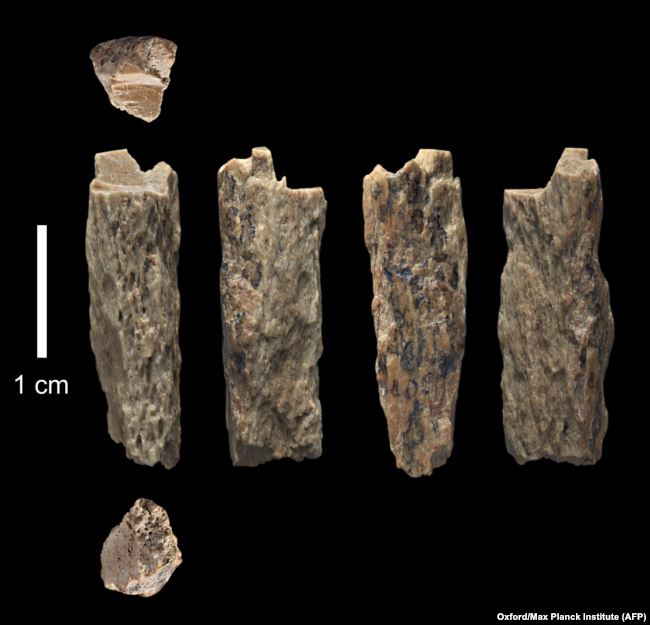
The bone belonged to an ancient human who had a Neanderthal mother and a Denisovan father. Nicknamed "Denny," the specimen is the first scientists have found that is a first-generation offspring from such interbreeding.

Scientists said the find may provide evidence that hominins interbred more often than previously thought. It also suggests that extinct groups like Neanderthals may not have died out, but rather were absorbed by the human species.

In prehistory, members of our species interbred with at least two other ancient humans: the Neanderthals and the mysterious Denisovans, who are known only from fragments of bone and teeth discovered in the Denisova Cave in Russia.

These interbreeding events were thought to be rare. But a few years ago, archaeologists found a 90,000-year-old bone fragment in the Denisova Cave.

Samantha Brown, then at the University of Oxford, discovered that it came from a hominin by examining the proteins preserved inside it. Based on the structure of the bone, her team postulated that Denny died at about age 13.
A photo of the bone fragment found at the Denisova Cave

After examining Denny’s DNA, scientists discovered that the individual in question was female, and that she had astonishing parentage. Her DNA was almost half Neanderthal and half Denisovan.

Denny’s mitochondrial DNA, which is inherited only from mothers, is Neanderthal. Therefore, her mother was Neanderthal and her father Denisovan.

The significance of the find is that it shows "interbreeding among different human lineages was more common than previously thought," Katerina Harvati-Papatheodorou of the University of Tübingen, Germany, told New Scientist magazine.

A 40,000 year-old Homo sapiens with a Neanderthal ancestor recently found in Romania also bolsters this notion.

Climate change doomed Neanderthals, study says
The amount of information we have about the human family tree is steadily growing, but there are still plenty of unanswered questions. One of the biggest mysteries is why our particular branch of human history was able to endure, while others like the Neanderthals were snuffed out. A new study by a group of researchers from multiple institutions in the US and Europe suggests that plunging temperatures may have been too much for Neanderthals to handle.

The work, which was published in Proceedings of the Natural Academy of Sciences, used observations of stalagmites that are tens of thousands of years old. The rocky formations can act as a sort of timeline of change, offering information on how climate patterns shifted over thousands and thousands of years.

In the paper, the scientists explain that a change appears to have taken place somewhere around 44,000 years ago. During this time, they believe the climate began to grow colder over a period of thousands of years and remained chilly for an extended period of time.

Temperatures eventually returned to where they were, but the archaeological record seems to indicate that many Neanderthals couldn’t push through the extended cold snap. These cold cycles repeated themselves, and each time they did things got worse for the Neanderthals.

“For many years we have wondered what could have caused their demise,” Dr. Vasile Ersek of Northumbria University explains in a statement. “Were they pushed ‘over the edge’ by the arrival of modern humans, or were other factors involved? Our study suggests that climate change may have had an important role in the Neanderthal extinction.”

The study is one of the first to draw a clear link between natural climate change and the effect it may have had on the Neanderthal population. The researchers note that the number of tools made by Neanderthals during the suspected cold periods seems to have been very low, hinting at the possibility that the ancient people were having a very hard time coping with the changing world. With a greatly diminished population, the race was ultimately doomed to extinction, especially when our own human ancestors began expanding into new areas.

Ancient Offspring Of Two Different Human Species Found - Climate change doomed Neanderthals, study says

DIVERS who have dedicated the last three decades to scouring a stretch of the River Tees have had their thousands-strong hoard declared as treasure.
Rolfe Mitchinson and Bob Middlemass started searching the area at Piercebridge, near Darlington, in 1987 and hung up their scuba suits at the site in September last year.

Their finds over the years combined have made up an collection of more than 5,000 items dating from the late Iron Age to the post-medieval period.

The majority of objects, more than 3,000, are Roman in origin and include coins, brooches, military equipment, tools and figurines.

At an inquest yesterday in Crook, senior coroner Jeremy Chipperfield concluded the Roman artefacts and coins were treasure.

A delighted Mr Mitchinson, 78, of Bournmoor, near Chester-le-Street, said: “We’ve been diving in the River Tees for 30 years and today was an accumulation of all that hard work.”

Mr Mitchinson and Mr Middlemass, 70, of Belmont, turned their attention from deep-sea diving to river diving in 1987 at the request of Northern Archaeology Group founder member Raymond Selkirk.

The pair, equipped with their gear, headed down to the northern banks of the river on the Raby Estates-owned land.

“In 1987 a lot of the main finds came out and then the more river bed we uncovered the more finds we made,” said retired printer Mr Mitchinson. “It was like an Aladdin’s Cave.”

As well as diving in rivers on archaeological missions across the country, the duo have continued to return to the place where it all began.

In September last year they were asked to stop diving at the site to allow for a major study to be carried out by Reading University.

A report from the British Museum to the coroner stated their finds were a "votive deposit or series of deposits", meaning they were deposited for religious purposes without the intention of recovery.

The expert identified the hoard as appearing to be associated with the piles and cross beams of a Roman-period bridge.

Among the items two or more precious metal coins and numerous gold and silver objects containing at least ten per cent of precious metal.

The court heard Durham University Museums has expressed an interest in acquiring the hoard.

The divers hope their finds will go on to be displayed to the public.

Hoard of Roman artefacts found by veteran divers 'is treasure'

Thursday, August 30, 2018

A tunnel network unearthed in Israel could be the site where Christians believe Jesus performed his first miracle by turning water into wine.

For hundreds of years, pilgrims have believed the site of the wedding miracle to be Kafr Kanna, a town in northern Israel, but archaeologists now believe the Cana of biblical times might be a hillside five miles to the north, the news outlet reported.

The location is the former site of Khirbet Qana, an ancient Jewish village, and excavations have uncovered a network of tunnels used for Christian worship, including an altar and a shelf hold the remains of a stone vessel with room for five more.
Six stone jars like this held the wine in the biblical account of the miracle.

Tom McCollough, who is directing the excavations, told the news outlet three other sites appear to fit the bill, but "none has the ensemble of evidence that makes such a persuasive case for Khirbet Qana."

"We have uncovered a large Christian veneration cave complex that was used by Christian pilgrims who came to venerate the water-to-wine miracle," he told. "This complex was used beginning in the late fifth or early sixth century and continued to be used by pilgrims into the 12th-century Crusader period.

"The pilgrim texts we have from this period that describe what pilgrims did and saw when they came to Cana of Galilee match very closely what we have exposed as the veneration complex."

As part of his evidence, McCollough points to the work of first-century Jewish historian Flavius Josephus.

"His references to Cana align geographically with the location of Khirbet Qana and align logically with his movements," McCollough told the news outlet. "The reference to Cana in Josephus, the New Testament and in the rabbinic texts would argue the village was a Jewish village, near the Sea of Galilee and in the region of lower Galilee.

"Khirbet Qana fulfills all of these criteria."

“At this point the Franciscans were managing Christian pilgrimage and facilitating easy passage rather than historical accuracy.”

Dr McCollough believes the discoveries at Khirbet Qana could even bolster the case for the historicity of the Gospel of John.

He said: “Our excavations have shown that this was in fact a thriving Jewish village located in the heart of much of Jesus’s life and ministry.

“For the Gospel of John, Cana is in some ways, Jesus’s safe place or operational centre. It is a place He and His disciples return to when they encounter resistance in Judea.

“I would argue our excavations warrant at least a reconsideration of the historical value of John’s references to Cana and Jesus.”


Mystery of Jesus turning water to wine REVEALED as archeologists make shock discovery


A 4,300-year-old city, which has a massive step pyramid that is at least 230 feet (70 meters) high and spans 59 acres (24 hectares) at its base, has been excavated in China, archaeologists reported in the August issue of the journal Antiquity.

The pyramid was decorated with eye symbols and "anthropomorphic," or part-human, part-animal faces. Those figures "may have endowed the stepped pyramid with special religious power and further strengthened the general visual impression on its large audience," the archaeologists wrote in the article. 

For five centuries, a city flourished around the pyramid. At one time, the city encompassed an area of 988 acres (400 hectares), making it one of the largest in the world, the archaeologists wrote. Today, the ruins of the city are called "Shimao," but its name in ancient times is unknown.

The pyramid contains 11 steps, each of which was lined with stone. On the topmost step, there "were extensive palaces built of rammed earth, with wooden pillars and roofing tiles, a gigantic water reservoir, and domestic remains related to daily life," the researchers wrote.

The city's rulers lived in these palaces, and art and craft production were carried out nearby. "Evidence so far suggests that the stepped pyramid complex functioned not only as a residential space for ruling Shimao elites, but also as a space for artisanal or industrial craft production," the archaeologists wrote.

A series of stone walls with ramparts and gates was built around the pyramid and the city. "At the entrance to the stepped pyramid were sophisticated bulwarks [defensive walls] whose design suggests that they were intended to provide both defense and highly restricted access," the archaeologists wrote.
A sacrificial pit of human skulls discovered at Shimao. The people sacrificed may have been captives captured in war. This photo was first published in 2016 in an article in the Chinese language journal Kaogu yu wenwu.
Credit: Photo courtesy Zhouyong Sun and Jing Shao

The remains of numerous human sacrifices have been discovered at Shimao. "In the outer gateway of the eastern gate on the outer rampart alone, six pits containing decapitated human heads have been found," the archaeologists wrote.

Some of the victims may be from another archaeological site called Zhukaigou, which is located to the north of Shimao, and the people of Shimao may have conquered the neighboring site. "Morphological analysis of the human remains suggests that the victims may have been related to the residents of Zhukaigou, which could further suggest that they were taken to Shimao as captives during the expansion of the Shimao polity," the study said.

Additionally, jade artifacts were inserted into spaces between the blocks in all of Shimao's structures. "The jade objects and human sacrifice may have imbued the very walls of Shimao with ritual and religious potency," the archaeologists wrote.

While archaeologists have known about Shimao for many years, it was once thought to be part of the Great Wall of China, a section of which is located nearby. It wasn't until excavations were carried out in recent years that archaeologists realized that Shimao is far older than the Great Wall, which was built between 2,700 and 400 years ago.

The team of archaeologists that wrote the article includes Li Jaang, a professor at the School of History at Zhengzhou University; Zhouyong Sun and Jing Shao, who are both archaeologists at the Shaanxi Provincial Institute of Archaeology; and Min Li, an anthropology professor at UCLA.

Human Sacrifices At Massive Pyramid Along Great Wall Change Archaeologists' View Of Early China

The roof of a church built on top of an ancient prison that is said to have held St. Peter before his crucifixion collapsed on Thursday in Rome. No injuries were reported.

The church was closed to the public at the time and is normally open only for marriage ceremonies, but dogs were brought in to sniff through the rubble to make certain no one had been buried, the fire department said.

The roof collapsed onto the floor of St. Joseph the Carpenter, which was built in the 1500s on top of the ancient Mamertine prison, where the defeated Gallic king Vercingetorix and Saints Peter and Paul are said to have been held.

Wooden beams and terracotta tiles were scattered in piles across the floor of the church, and one beam crashed through the floor and vaulted ceiling of a chapel below, fire official Luigi Liolli said shortly after inspecting the damage.
Italy has sought to attract private investors to renovate its historical sites, including the Colosseum, as budget austerity has cut into spending needed to maintain the country’s rich historical and artistic heritage.

In recent years several walls have collapsed in the ancient city of Pompeii, which was buried in volcanic ash almost 2,000 years ago. Pompeii, which has been partially excavated by archaeologists, is one of Italy’s most popular tourist attractions.

Roof collapses on historic church where St. Peter. Rome , Itaty

Artefacts dating back more than 800 years have been found at the Palace of Holyroodhouse.

Items discovered during excavation work in Edinburgh this year include a 12th-century jug fragment, a horse skeleton and a medieval shoe.

The diets of ambassadors and courtiers at Abbey Strand – during the reigns of Mary, Queen of Scots and James VI – were also revealed by the mass of oyster shells and wine bottles dug up.
Researchers also say wine and spirit containers, food debris and fragments of children’s games give a glimpse of life for the 25 impoverished families living in cramped tenements in the area during the 18th and 19th centuries.

Gordon Ewart of Kirkdale Archaeology, which carried out the work, said: “The survey has provided a unique opportunity to understand more about the fascinating development of the Abbey Strand and its surroundings – and to explore how the site has been the historic and symbolic bridge between the palace and the city of Edinburgh for centuries.”

More than 40 trenches were dug for an archaeological survey as part of the £10 million works to improve the visitor experience at the palace.

Excavations in the Abbey Strand buildings by the Edinburgh-based firm uncovered the earliest evidence of settlement on the site.

Timber posts dating from the 12th century are believed to mark the location of a terrace that led to the then low-lying island on which Holyrood Abbey was built in 1128.

They could also have formed part of a structure used by the workmen who built the Abbey.

One of the earliest finds is a medieval leather shoe from beneath one of the cellars in the Abbey Strand.

The bones of Highland cattle found in the gardens provide evidence of trading between Edinburgh and the Highlands and Western Isles.

The palace is used by the Queen when carrying out official engagements in Scotland.

Queen's Edinburgh Residence Yields 800-Year-Old Artifacts

The Book of Deer Project believe they are on the cusp of finding the location of the lost monastery of Aberdeenshire.

The Book of Deer is a handwritten book of Gospels dated to the 10th century. While the manuscripts that the Book of Deer resembles the most are Irish, scholars have tended to argue for a Scottish origin. Written in Latin, Old Irish, and Scottish Gaelic, it is considered to contain the earliest surviving Gaelic writing from Scotland, making it an important piece of Scotland’s cultural history.

Dr. Michelle Macleod, lecturer in Gaelic at Aberdeen University, explaining the significance of the manuscript:

“The Gaelic notes in the book are the first written examples of Scottish Gaelic. There are some deviations in the language from the shared common Gaelic of Scotland and Ireland which had been used in earlier manuscripts. These deviations, of which there are several, are the first written indication that the languages are separating and would be an indication of what people were likely saying.

“The Book of Deer is a tiny book but it has left a huge legacy for us, not only in the north-east but for the whole of Scotland. We had to wait another 200-300 years after the Book of Deer to find any more evidence of written Scottish Gaelic.”

A group of archaeologists and interested citizens formed the Book of Deer Project, a Scottish charitable incorporated organization that has been working since the 1990s to discover the exact location of the lost monastery in which the Book of Deer was penned.

New discoveries of a hearth and charcoal dated between the 12th and 13th centuries came earlier this year, when the Book of Deer Project changed their focus from fields around the village to land closer to Deer Abbey, the remnants of which still stand. Now, the discovery of a medieval-era game board has the team believing they are closer than ever to discovering the site of the lost monastery.

Layers of charcoal excavated from underneath the disc-shaped game board were dated between the 7th and 8th centuries. While this is significantly older than the Book of Deer, the find suggests that the site was active in the time leading up to the writing of the Book of Deer.

Anne Simpson from the Book of Deer Project said, “The rare gaming board was the star find of the dig, but it’s the carbon dating which really thrills me, being so tantalizingly close to the period of the monastery.”

The find has led many of the experts who work with the Book of Deer Project to believe that the long search for the lost monastery of Aberdeenshire is coming to a close. Bruce Mann, archaeologist for Aberdeenshire Council, commented:

“This radiocarbon date excitingly places at least one of the newly excavated structures in the 8th Century AD.” He added, “While this is earlier than the 10th Century writings, it still provides the first confirmed evidence of any activity before the 13th Century.

“I genuinely think we’re close to solving this long standing mystery.”

Archaeologists Unearth Medieval Game Board During Search for Lost Monastery

Wednesday, August 29, 2018

The image shows the distribution of surface ice at the Moon’s south pole (left) and north pole (right), detected by NASA’s Moon Mineralogy Mapper instrument. Blue represents the ice locations, plotted over an image of the lunar surface, where the gray scale corresponds to surface temperature (darker representing colder areas and lighter shades indicating warmer zones). The ice is concentrated at the darkest and coldest locations, in the shadows of craters. This is the first time scientists have directly observed definitive evidence of water ice on the Moon’s surface.
Credits: NASA

In the darkest and coldest parts of its polar regions, a team of scientists has directly observed definitive evidence of water ice on the Moon’s surface. These ice deposits are patchily distributed and could possibly be ancient. At the southern pole, most of the ice is concentrated at lunar craters, while the northern pole’s ice is more widely, but sparsely spread.

A team of scientists, led by Shuai Li of the University of Hawaii and Brown University and including Richard Elphic from NASA’s Ames Research Center in California’s Silicon Valley, used data from NASA’s Moon Mineralogy Mapper (M3) instrument to identify three specific signatures that definitively prove there is water ice at the surface of the Moon.

M3, aboard the Chandrayaan-1 spacecraft, launched in 2008 by the Indian Space Research Organization, was uniquely equipped to confirm the presence of solid ice on the Moon. It collected data that not only picked up the reflective properties we’d expect from ice, but was able to directly measure the distinctive way its molecules absorb infrared light, so it can differentiate between liquid water or vapor and solid ice.

Most of the newfound water ice lies in the shadows of craters near the poles, where the warmest temperatures never reach above -250 degrees Fahrenheit. Because of the very small tilt of the Moon’s rotation axis, sunlight never reaches these regions.

Previous observations indirectly found possible signs of surface ice at the lunar south pole, but these could have been explained by other phenomena, such as unusually reflective lunar soil.

With enough ice sitting at the surface – within the top few millimeters – water would possibly be accessible as a resource for future expeditions to explore and even stay on the Moon, and potentially easier to access than the water detected beneath the Moon’s surface.

Learning more about this ice, how it got there, and how it interacts with the larger lunar environment will be a key mission focus for NASA and commercial partners, as we endeavor to return to and explore our closest neighbor, the Moon.

The findings were published in the Proceedings of the National Academy of Sciences on August 20, 2018.

Author: Frank Tavares

Members of the news media interested in learning more about this research should refer to the NASA Ames Media Contacts page to get in touch.

Ice Confirmed at the Moon’s Poles and could possibly be ancient.

Tuesday, August 28, 2018

Archaeologists from China and Great Britain came to the conclusion that before the state of Yin, which is considered the first ancient Chinese state formation, there was an ancient civilization/

"Its representatives were able to develop complex engineering structures that protected large cities from floods. The article published in the journal Antiquity reads that the authors reviewed recent archaeological discoveries related to the recently discovered culture of Lianzhu," the message said.
The state of Yin (also known as the Shang state) appeared around 1600 BC. 

However, as early as 1936, archaeologists discovered an ancient Chinese settlement, named Lianzhu, which was located in the Yangtze River Delta, 160 km west of Shanghai, in Zhejiang Province. In the graves excavations in 1986 the cientists found graves where representatives of the nobility were buried. It proved existence of a clear distinction between classes. The research proved that the age of graves reached 4800-5300 years.

Later, archaeologists discovered a complex system of platforms and fortifications, designed to protect the settlement from flooding. The width of the city wall was estimated to be no less than 20 meters, and the height in some places reached four meters. Thus, the Lianzhu settlement turned out to be one of the largest cities of the late Neolithic period. 

There was also a water supply system, which was used to irrigate farmland. The ancient Chinese created a system of dams and artificial water reservoirs, the total volume of which reached 50 million cubic meters.

Ancient civilization of engineers lived on territory of modern China


It is a piece of Scotland’s bloody clan history that has remained hidden for more than 400 years.

But a rare find during an excavation at Dunyvaig Castle on Islay has uncovered the seal of Sir John Campbell of Cawdor.

The artefact dates back to 1600s when the Campbell and MacDonald clans were locked in a violent and bitter feud over Scotland’s islands.

Buried below mounds of rubble, the find - described as “remarkable” and “extremely rare” by archaeologists and historians - was discovered on a hidden clay floor at the historic site.

Archaeologist Dr Darko Mari?evi?, director of the excavation at Dunyvaig, said: “This is a remarkable find. Not only is it a beautiful and well-preserved object, but it comes from the floor of a building that we can now confidently date to the Campbell occupation.

“So buried below this floor, we will have the story of the MacDonald’s – the Lords of the Isles – to reveal.”

Roddy Regan, an archaeologist at Kilmartin Museum, added: “Seals are extremely rare finds. This discovery conjures up an image of a Campbell garrison fleeing from the castle when under attack, dropping and losing one of their most precious items, or maybe the seal had once been hidden within a wall niche and long forgotten.”

Once used to sign and seal charters and legal documents, the seal is a circular disc of lead which carries the inscription IOANNIS CAMPBELL DE CALDER (Calder was the original spelling of Cawdor).

It carries the Cawdor coat of arms with a galley ship and a stag and is dated 1593.

The Campbells and the MacDonald’s fought over Dunyvaig in the early 17th century, with a series of sieges and bombardments of the castle until the Campbells finally prevailed.

Sir John took ownership of Islay in 1615.

Mr Regan added that the seal could have been lost in a later raid in 1646 when Alasdair MacColla, a descendent of the MacDonalds, reclaimed the castle.

He said: “Alasdair MacColla, a descendent of the MacDonalds, retook the castle and installed his elderly father, Colla Ciotach to defend it.

“The castle was immediately besieged again.

“We may have Colla Ciotach’s hasty defences in the form of turf walls built above the already ruined stone walls of Dunyvaig, before he was forced to surrender in 1647 and then hanged from the castle walls.”

The excavation at Dunyvaig is being undertaken by charity Islay Heritage in partnership with the University of Reading.

A team of around 40 experts, including leading archaeologists, geophysicists, scientists and environmentalists, are almost at the end of an initial three-week dig at the castle, which sits in Lagavulin Bay, with further projects planned for next year.

Organisers were keen to use the excavation as a teaching project for current archaeology students and it was one such student, Zoë Wiacek, from the University of Reading, who discovered the seal.

She said: “I removed a piece of rubble and it was just sitting there on the ground. I immediately knew it was an important find, but had no idea what it was.

“I called over my trench supervisor, and when it was lifted, the soil fell away to show the inscription. Then everyone became excited.

“I am so proud to have found something so important for the project and for Islay.”

Professor Steven Mithen, chairperson of Islay Heritage and director of the Dunyvaig Project added: “Coming towards the end of the dig, after the team had worked so hard to move huge amounts of turf and rubble, this has been a thrilling discovery.

“We have found a piece of Islay’s past and Scottish history. We can’t wait to start digging again in 2019.”

Islay Heritage hope to raise further funds to allow excavation work to continue at Dunyvaig over the next five years.

Ancient clan artefact uncovered after being hidden for 400 years

The cheese was found as a white mass in a broken jar. (Supplied: University of Catania and Cairo University)

Forget vintage, extra mature or barrel-aged — scientists believe they have found the world's oldest cheese in an Egyptian tomb...and it dates back to the 13th century BC.
According to a study published in ACS' journal Analytical Chemistry, ​the cheese was found in the tomb of Ptahmes, which was rediscovered in 2010.

The tomb of the former mayor of Memphis in Egypt was initially unearthed in 1885. After being lost under drifting sands, it was rediscovered eight years ago and archeologists found broken jars at the site a few years later.

One jar contained a solidified whitish mass, as well as canvas fabric that might have covered the jar or been used to preserve its contents. 

After dissolving the sample, the researchers purified its protein constituents and analyzed them with liquid chromatography and mass spectrometry.

The peptides detected by these techniques show the sample was a dairy product made from cow milk and sheep or goat milk. The characteristics of the canvas fabric, which indicate it was suitable for containing a solid rather than a liquid, and the absence of other specific markers, support the conclusion that the dairy product was a solid cheese.

Dairy danger
However, eating may not have been advisable, even back then. Other peptides in the food sample suggest it was contaminated with Brucella melitensis​, a bacterium that causes brucellosis. This potentially deadly disease spreads from animals to people, typically from eating unpasteurized dairy products. If the team's preliminary analysis is confirmed, the sample would represent the earliest reported biomolecular evidence of the disease.

Prior to this, the earliest evidence of cheese-making in the archaeological record dates back to 5500 BC, in what is now Kujawy, Poland, where strainers with milk fats molecules have been found. Cheesemaking may have begun independently of this by the pressing and salting of curdled milk to preserve it.

The research was supported by the Italian Ministry of Education, University and Research​, the University of Catania​ and Cairo University​.

World's oldest cheese confirmed in Egyptian tomb

Monday, August 27, 2018

An unprecedented archaeological dig is underway beneath Melbourne's CBD.

In order to make way for the Metro Tunnel — a rail network that will include five new stations — a team of more than 100 archaeologists, students and staff are overseeing excavations at two locations.


Here's a look at some of the 500,000 artefacts they've found in the digs so far:
Piles of teeth washed down the sink
Yes. It's disgusting. More than 1,000 human teeth were found at one of the locations, next to the Young and Jackson pub on the corner of Flinders and Swanston streets.

Excavation director Meg Goulding said there used to be a dentist on the site.

"This guy clearly disposed of a lot of his teeth down the pipe, down the sink," Meg Goulding said.

"They gross me out. I mean I've excavated a lot of skeletal remains in my time, but there's something about disembodied teeth that is very unattractive."

The teeth, some of which could date back to 1898, are especially disgusting by modern standards.

"A lot of them are unattractive because they've got very big holes in them," Ms Goulding said.

"So they instantly say to you pain and agony, both in terms of people suffering for the length of time that they must have had some of these teeth in their mouths, but also just the extraction process."

A peek into industries past
A number of objects highlight the different businesses which have stood on the sites during the 180 years since the European settlement of Melbourne.
Hundreds of lead print types were discovered, left behind by a stationer and printer who worked in the area in the late 1800s.

There are also labels from James Dickson & Co ginger ale bottles, a company which started in a Richmond shed during the 1850s gold rush before moving to the CBD in 1869.

Heat-resistant ceramic crucibles may have been used in a printing workshop or sold by stationery shops.

The seedy underbelly of early Melbourne
Gambling dice and gaming discs have also been unearthed, mostly made from cattle bone or ivory.

At least 20 dice were recovered from 13 Swanston Street, a site formerly occupied by hotels, along with corks, corkscrews, glass tumblers, wine glasses, swizzle sticks and alcohol bottles.

Archaeologists also uncovered 34 glass discs which suggest that opium lamps were manufactured in the area.

Items left behind by wealthy patrons who would have visited the hotels include an opulent jet earring which probably fell through the floorboards, lost for more than a century.

Children's toys from a simpler time
Plenty of children's toys have also been uncovered, including a toy soldier that dates back to the 1850s.

It was likely made in Germany and depicts a British army drummer around the time of the Battle of Waterloo.

There's also a yellow bird-shaped whistle that dates back to at least the 1860s and the head from a china doll.
The doll is believed to be a Frozen Charlotte, which were popular toys that got their name from a song about a vain girl who refused to cover up and froze to death on a winter's night.

The connection to Aboriginal land
When the excavations from European settlement are complete, traditional owners will be invited on site to excavate older deposits.

Ms Goulding said the area was used by Indigenous people camping by the Yarra River.

"Towards the end of our historical archaeological program we then move into the Indigenous archaeological program."

What will happen to the artefacts?
The team is processing the hundreds of thousands of artefacts uncovered in the first four months of the dig.

"A conservator does conservation work on the very fragile ones and then the artefacts get catalogued and they get processed properly," Ms Goulding said.

"They're bagged up, labelled and then they get stored for future generations."

Some of them will be put on display at Metro Tunnel HQ located at 125-133 Swanston Street from September 24.

1,000 teeth and opium lamps among items found during Melbourne Metro Tunnel dig

Popular Posts

Translate

Followers